Bonneville Fish Hatchery- Week Three

Wednesday, August 23, 2023

We’ve been volunteering at the hatchery now for three weeks. Weather is highly variable with some days in the high 70’s, some record setting days at 105 degrees! Gads, this is the Pacific Northwest and the high temperatures were 20 degrees higher than at our home in the high desert, Reno.

Tunnel Fire, Columbia Gorge

On top of that we were treated to wildfire smoke eminating from our neighbors to the north, British Columbia. The Air Quality Index pegged at 193 which is unhealthy air especially for “sensitive groups”- such as us older folks. We limited our work on unhealthful air days to less strenuous tasks. The air was really ugly, smoke masking the beautiful cliffs and bluffs that line the Columbia River Gorge to the point where they completely disappeared

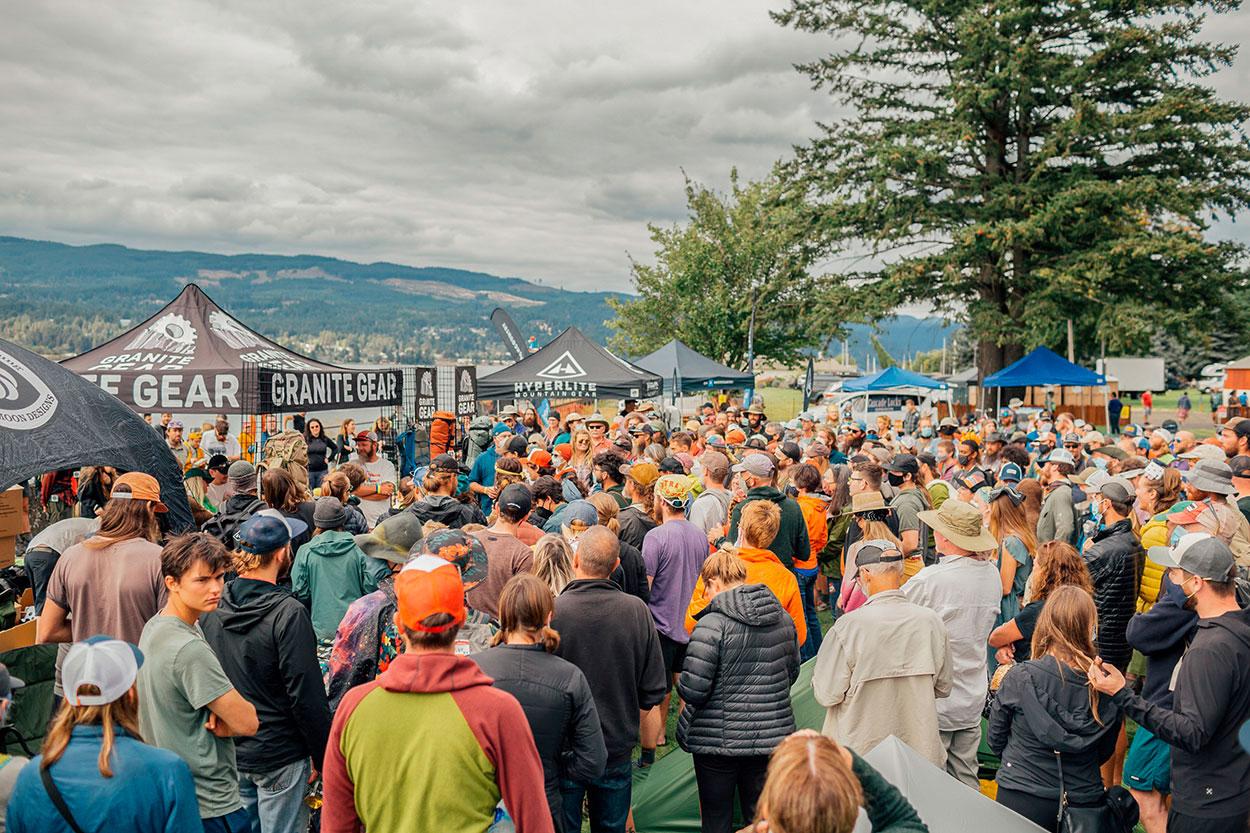
PCT DAYS Sponsors - Pacific Crest Trail Days

We were very surprised to see so many families marching around the hatchery in that smoke as youngsters are also included in the “sensitive groups” category. It seems like most of them had attended the Pacific Crest Trail Days at Marine Park in Cascade Locks. The event draws a lot of folks with over 100 vendors offering outdoor recreation products and attendees are invited to participate in activities, games, presentations, gear raffles and listen to live music. The event is free to all comers and draws a lot of folks- even when air quality is in the toilet!

Hugh has a new seasonal helper. Haley will take some of the load off of Hugh and us volunteers. She seems to be a hard worker and gets a lot done. One of the things she did was take a big pile of cut limbs that Hugh had stacked up behind the duck pond, cut them into manageable pieces and transport them to the dumpster. Those limbs would have gone to the burn pile a few years ago but Oregon Depatment of Transportation asked the hatchery not to burn as the smoke distracted the drivers on Interstate 84. Anyhow, the big deciduous leaves on those limbs had dried and when Haley drove them over to the dumpster a lot, no, a whole lot of those leaves had dislodged and spread all over the clean pavement. We were off duty when that happened. By the next morning all the leaves had been blown onto the grass so Hugh could collect them with the large ride-on lawn mower while he mowed the lawn..

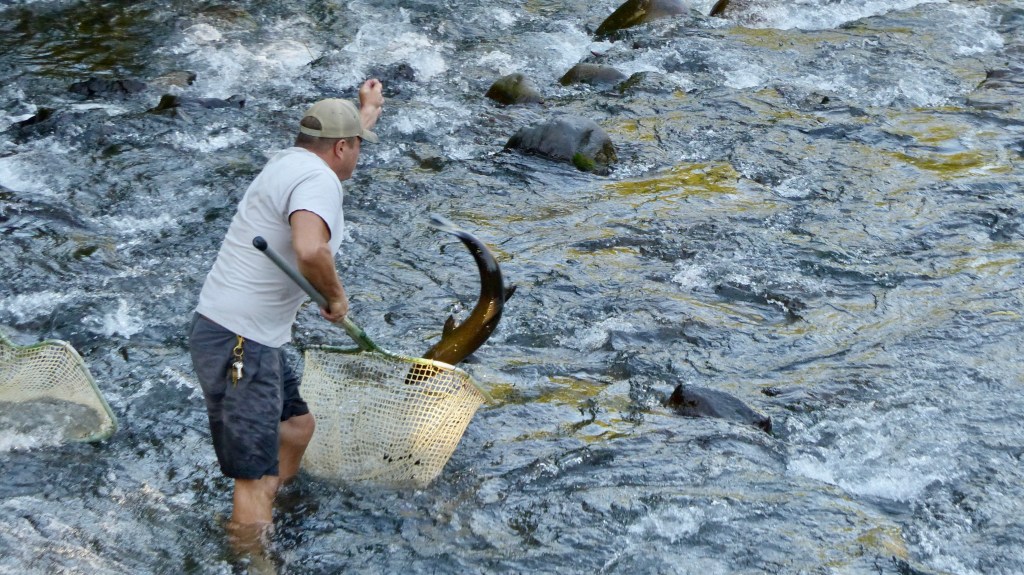
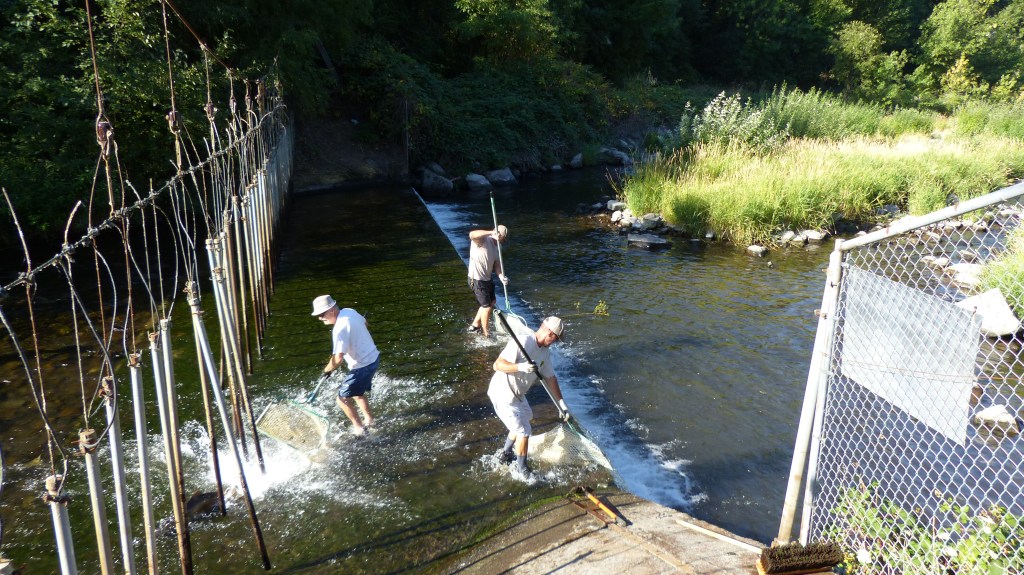
We had some excitement recently- a Salmon Rodeo! Yep, you read that right. The hatchery has been short handed with one member out with an injury and another loaned to Cascade Hatchery. Normally the water channels, the fish ladder and the holding ponds would all be ready to receive returning fall run salmon but not this time. Several hundred salmon returned to Tanner Creek only to find the fish ladder dry as a bone so they jumped over the weir and swam upstream a ways. So it was all hands on deck to ready the hatchery for their arrival which included borrowing some folks from Cascade Hatchery. The “rodeo” began in the morning. The fish folks went up Tanner Creek to the hatchery property line with nets and pushed the fish back down past the weir. A couple of “pushes” and most of the salmon had been pushed downstream from the weir at which time the electric fence was energized prohibiting the salmon from swimming upstream again. Today salmon are swimming up the fish ladder and congregating in the lower pool as designed.

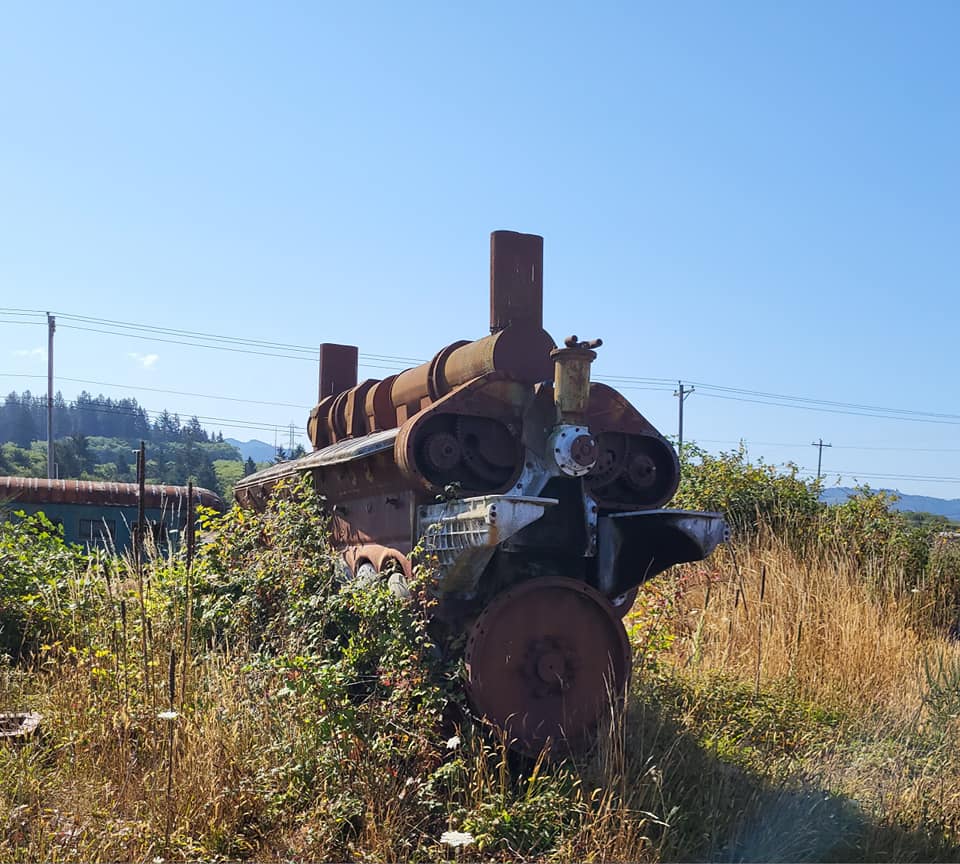
Our Toro Workman used to perform our duties

So other than our routine 4 days on, 4 off and a couple of 4 mile runs into Cascade Locks for minor grocery shopping, into Wood Village 20 miles west for some serious grocery shopping at a nice Walmart and across the river to Stevenson Pharmacy for prescription refills, the “salmon rodeo”, the heat and wildfire smoke from Canada have been the highlights thus far.

So until our next post, Adios!

The Columbia Gorge National Scenic Area

I don’t have a lot to talk about. The hatchery keeps humming along. The young fish (fry) are being fed daily and the ones that don’t survive are removed. We are performing our daily duties helping the groundskeeper Hugh. We’ve trimmed the curbs of overgrown ivy and removed ivy growing up tree trunks, watered, assisted the hatchery’s many visitors, and many other chores as needed. The salmon run will begin soon giving me more fodder for the blog. In the meantime I include some information concerning the gorge for you reading pleasure.

The narrative below is borrowed from the website “Friends of the Columbia Gorge”. I thought it appropriate to add geological, cultural and information of the natural wonders here in this beautiful gorge. The link I have included is and interactive map visitors map of the gorge and surrounding area:

Geological history

The Gorge was crafted over eons, even before the Cascades rose, and its cataclysmic history of volcanic eruptions, massive floods, and landslides is still evident today. The Gorge’s formation began 40 to 60 million years ago, when molten lava pressure pushed up granite to frame the Columbia Basin.

Between 6 to 17 million years ago, ancient volcanoes erupted, streaming more than 20 massive basalt flows into the area that’s now the Gorge. They formed rock layers up to 2,000 feet thick, cutting the canyon and becoming most of the rocks in the Gorge today.

Then glacial Ice Age floods sculpted the canyon into a gorge. About 40 Missoula floods — the planet’s largest known floods during the last two million years — generated water flows 10 times the total flow of all Earth’s rivers. They transformed river tributaries into the world’s largest concentration of waterfalls: about 80 named falls, including famous 620-foot Multnomah Falls, the United States’ second-highest year-round waterfall.

The Columbia River, the only sea-level route through the Cascades, still carves canyon walls that can soar 4,000 feet. Rock pillars jut from the river, monoliths perch atop cliffs, and smaller canyons branch off from the Gorge. Surrounding mountains reach even higher, including Mount Hood to the south of the Gorge and Mount St. Helens to the north. Both are active volcanoes, and Mount St. Helens’ 1980 eruption remains the country’s deadliest.

Natural wonders

Beyond the iconic canyon and glittering river, the Gorge boasts extraordinary landscapes, habitats, and biodiversity. A range of ecosystems and micro-habitats extend along its length, from arid grasslands in the east to temperate rainforests in the west. And as the land rises from river to mountaintops, riparian areas and wetlands transition to alpine crags and meadows.

The gorge looking east from Stevenson, WA

These wild places support astonishing biodiversity, including:

  • More than 800 species of plants, including 15 species of wildflowers that exist nowhere else in the world
  • Approximately 45 species of fish, including shad, lamprey, sturgeon, steelhead, and chinook, coho, and sockeye salmon
  • 15 species of amphibians and reptiles, including salamanders, tree frogs, turtles, lizards, and snakes
  • More than 200 species of birds, including spotted owls, bald eagles, and migratory waterfowl and songbirds traveling the Pacific Flyway
  • More than 20 species of mammals, including pika, deer, marmots, coyotes, bobcats, and black bears
  • About 25 threatened or endangered plant and animal species, including 12 stocks of salmon and western pond turtles.
  • Two glacier-fed, federally designated Wild and Scenic Rivers — the Lower White Salmon and the Lower Klickitat — that flow through the Gorge, providing fish and wildlife habitat as well as scenery and recreation.

Cultural wonders

With Native Americans as the Gorge’s first residents and stewards, the Gorge’s human history stretches back 10,000 to 15,000 years. For millennia, Native Americans made their homes, traveled, and traded along the river. Tribes from around the Pacific Northwest gathered to fish at Celilo Falls.

Today, the National Scenic Area recognizes four treaty Tribes — the Confederated Tribes of Warm Springs, the Confederated Tribes and Bands of the Yakama Nation, the Confederated Tribes of the Umatilla Indian Reservation, and the Nez Perce Tribe — in its legislation and management plans. In addition, federal state agencies also consult with recently recognized Tribes, including the Confederated Tribes of Grand Ronde and the Cowlitz Indian Tribe.

The Gorge was a natural travel corridor for Native Americans — and later, for explorers, settlers, and traders from Europe and the eastern United States. In 1805-1806, Lewis and Clark famously explored and wrote extensively about the Gorge. Their expedition and others opened the area for thousands of Oregon Trail pioneers, who largely displaced Native people from their lands and communities.

Historic Columbia River Highway

Today the Gorge hosts 13 designated urban areas: Cascade Locks, Hood River, Mosier, and The Dalles in Oregon, and North Bonneville, Stevenson, Carson, Home Valley, White Salmon, Bingen, Lyle, Dallesport, and Wishram in Washington. And throughout the Gorge, museums, historic landmarks, and interpretive centers connect today’s thriving communities with the rich history of generations that came before and the ongoing cultural traditions and practices of regional tribes.

Sunrise viewed from Carson Ridge on the Washington side of the Columbia River. (photographer: Chris Van Ness)

And it is fragile

While the Columbia Gorge remains an active commerce corridor, both by river and rail, it continues to change. The Gorge became a National Scenic Area in 1986 by an act of Congress to protect and enhance its scenic, natural, cultural, and recreational resources. The 292,000-acre Columbia River Gorge National Scenic Area is the United States’ largest and most populated scenic area, home to more than 75,000 people. Native Americans still celebrate their traditions rooted in the Gorge and shape the area’s future, including by working to protect natural, cultural, and scenic assets.

Millions of people visit the National Scenic Area’s magnificent landscapes each year. Recreational opportunities abound, including:

  • Observing salmon navigate fish ladders along one of the world’s greatest migrations
  • Kiteboarding and windsurfing in Hood River, one of the world’s best wind sports destinations
  • Hiking trails and routes that stretch more than 200 miles through the Gorge, including sections of the Pacific Crest Trail and the Lewis and Clark National Historic Trail
  • Visiting wildlife refuges and 21 state parks and recreation areas
  • Using transportation options along the Columbia River Highway, the United States’ first scenic highway and a national historic landmark that curves 70 miles through the Gorge
  • Biking, kayaking, rafting, fishing, camping, and birdwatching

The Gorge has a special meaning to millions of people. It feeds our souls and speaks to the history of those who came before us. It’s a sanctuary for species that live nowhere else.

And it is fragile.

Our First Days at the Fish Hatchery

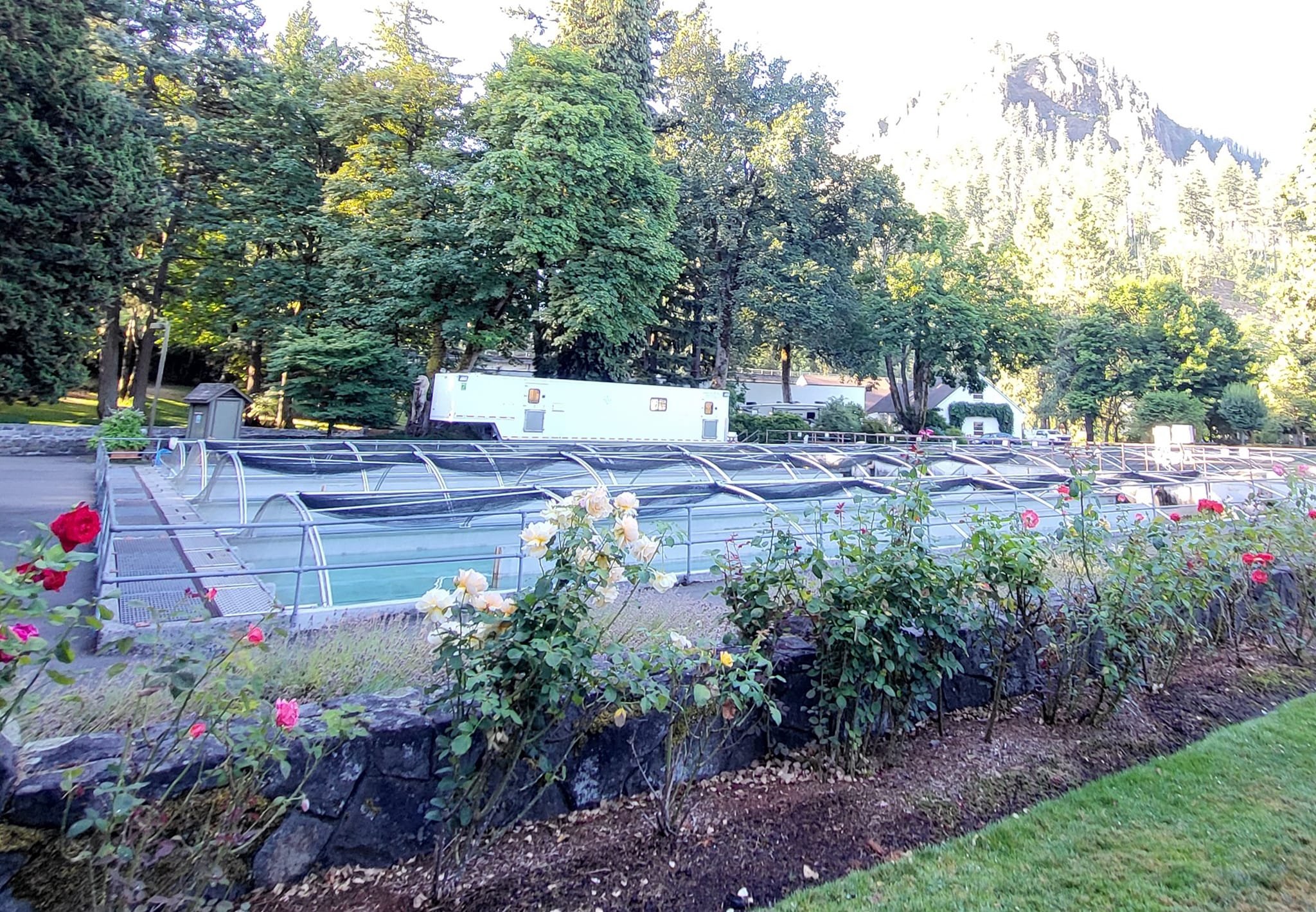
Our job here at the hatchery is the same as it has been for the many times we have volunteered here. Help with landscaping chores and when the fall salmon run starts, help the fish guys and gals with spawning. The run should start in a couple of weeks and the fish folks are gearing up for the run.

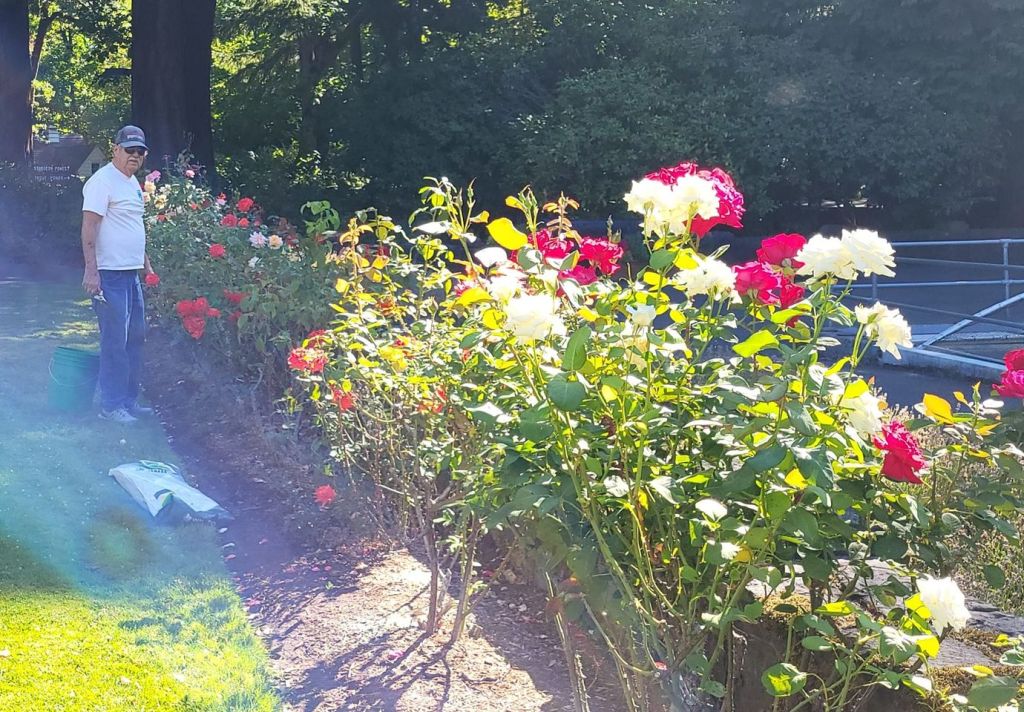
Meanwhile we have plenty to do- assisting the many visitors, deadheading flowers, watering potted plants, watering dry areas in the planter islands, trimming ivy from curb lines and anything else that assists Hugh, the groundskeeper. He supplies gardening tools and a Toro utility vehicle that currently has a 40 gallon water tank and watering wand set up installed on it. We also empty the numerous trash cans that are strategically placed around the campus, police the restrooms and large parking lot. A lot of brochures and informational papers need to be copied and put in the display rack. To keep the place tidy we also use blowers to round up leaves on the streets and public areas and then dispose of them. There’s always a special project going on around here so we never run out of things to do. We are on duty 4 days, 5 hours a day each, then 4 days off. Jil and I never seem to take our full four days off as we get bored. Sometimes we’ll take time to go grocery shopping or take a nice drive up into the forest. We like to visit the nearby lava beds and drive up to an overlook that offers a spectacular view of the southeast side of Mt. St. Helens. We’ll probably do that since we’ll be here a couple of months.

Lamprey

Occasionally the hatchery hosts special projects. A few years ago it was rearing salmon with special DNA for an Idaho Native American tribe. Today its lamprey. Lamprey numbers above the dam have declined because lamprey have a tough time negotiating the dam’s fish ladders. Lamprey are part of Native American’s ceremonial food and the lamprey’s number are depleted above the dam. Today the Columbia River Inter-Tribal Fish Commission (Nez Perce, Umatlla, Warm Springs, Yakima tribes) is using a building as home base to bring in lamprey captured below the Bonneville Dam to store in tanks until enough have been collected. They are then transported above the dam and released. The Commission is hopeful that giving the lamprey a free ride past the dam that their numbers will increase. Lamprey have been on earth longer than dinosaurs at 410 million years, in fact, as long as trees and insects!

Lamprey can be 31 inches long, are often found at sea or often far offshore. They spend most of their lives as larvae (Ammocoetes) which live in fresh water for 3-7 years. The ammocoetes are filter feeders that dig burrows into soft bottom substrates. The undergo metamorphosis and take on the juvenile/adult body morphology. The juvenile/adults have a jawless, sucker-like mouth that allows them to become parasitic on other fish and sperm whales, attaching themselves with their suckers and feeding on blood and body fluids. They typically spawn in a similar habitat as pacific salmon or trout. They construct nests in small gravel in which the females can lay 100,000 eggs. The pacific lamprey is not the same fish as the sea lamprey that has invaded the Great Lakes.

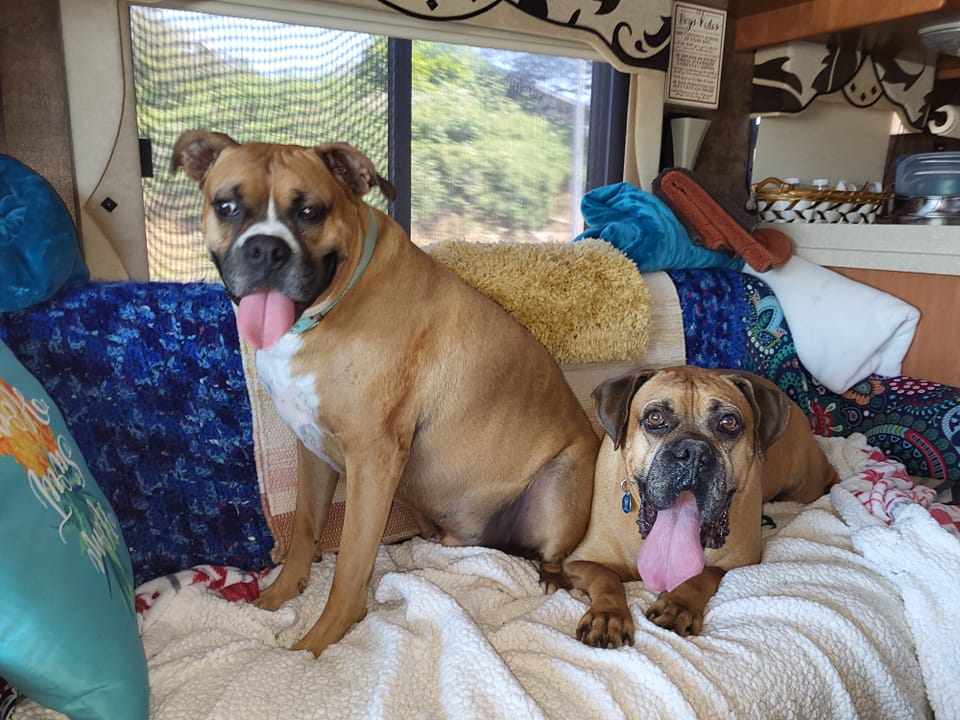
Ollie and Buster

Our older Boxer, Buster, hurt his left hind leg a few weeks ago. We have a supply of doggie meds on board which helped him out. He was almost back to normal in a few days. Then he got sick, really sick. He wouldn’t eat, kept throwing up and just didn’t act normal. A day of that and we took him to a veterinary clinic 20 miles away in Hood River. They took him as a walk-in, sandwiching him in between appointments. I waited out in the car for a couple of hours, then the Vet called to explain that his bloodwork was normal and his abdomin was normal. She gave Buster an injection meant to settle his stomach, two types of meds and said if he didn’t get better she’d recommend X-rays and possibly surgery. We decided against the surgery route as he is pushing near the end of a boxer’s life cycle.

For for 6 days Buster ate very little, mostly canned dog food wrapped around his pills and shoved down his throat. If offered food this certified foodie would just turn his head away. He finally stopped throwing up- a plus! Now just eat dog! Then one morning he took his normal position standing nearby Jil while he and Ollie’s food was being prepared. He ate a little chicken, then a little more later on. We fed him small meals to let his gut adjust to the introduction of food. He is back to his normal chow hound self now. Boy, are we happy he feels well again!

I’ll be writing again in the near future. Hopefully I’ll have more to share with y’all.

Travel to the Bonneville Fish Hatchery

Monday, August 7, 2023

We arrived at the Bonneville Fish Hatchery on July 31st, a day early. Our site #2 was open and Misty River RV Park electrical power was not good so we decided to come in a day early. We left the Tillamook area and headed east on Oregon Highway 6 following the Wilson River Canyon for quite a ways. It was a pretty heavily wooded drive, the highway was busy so we pulled over several times to allow traffic to pass us.

I was planning on stopping for fuel in Banks, Oregon, a town of 1960 souls. Banks is known as the Gateway to Outdoor Adventure. Diesel is $4.80 a gallon there. Never having traveled this highway I missed the turn off. We turn east on US 26. Jil looks up a Chevron station in Hillsboro (106,447 souls). It’s a lot tighter getting into the station and a ton more traffic than the one in Banks but doable. Fuel is 29 cents more a gallon in a much larger town- gads. Luckily we only needed 60 gallons so $30 increase in price over that of the Banks Chevron. We filled the tank for a mere $300.

Hillsboro (106,447 souls) is located in the Tualatin Valley and is the fifth largest city in Oregon, and is located on west side of the Portland metropolitan area. The city hosts many high-technology companies and is known locally as the Silicon Forest. The valley was home to native Americans who found the region suitable for fishing, hunting, food gathering and agriculture. Agriculture is still a large part of the economy here. Hillsboro is also home to the Little People TV show.

Portland, Oregon

Soon we join the thundering herd in the heart of Portland (652,503), the most populous city in Oregon. Approximately 2.5 million people live in the Portland-Vancouver- Hillsboro OR-WA metropolitan statistical area. Located at the confluence of the Columbia and Willamette Rivers, water access provides convenient transportation of goods with the timber industry a major force in the city’s economy. This beautiful city had a reputation as one of the most dangerous port cities in the world, a hub of organized crime and racketeering. Beginning in the 1960’s Portland has been noted for its growing liberal and progressive political views. As such, many eastern Oregonians are seriously talking of secession from Oregon and starting a more conservative state. As with many places in the U.S., the largest cities tend to be more liberal and also outnumber the more rural folks so their votes are more likely to prevail over the wishes of the more conservative country folk.

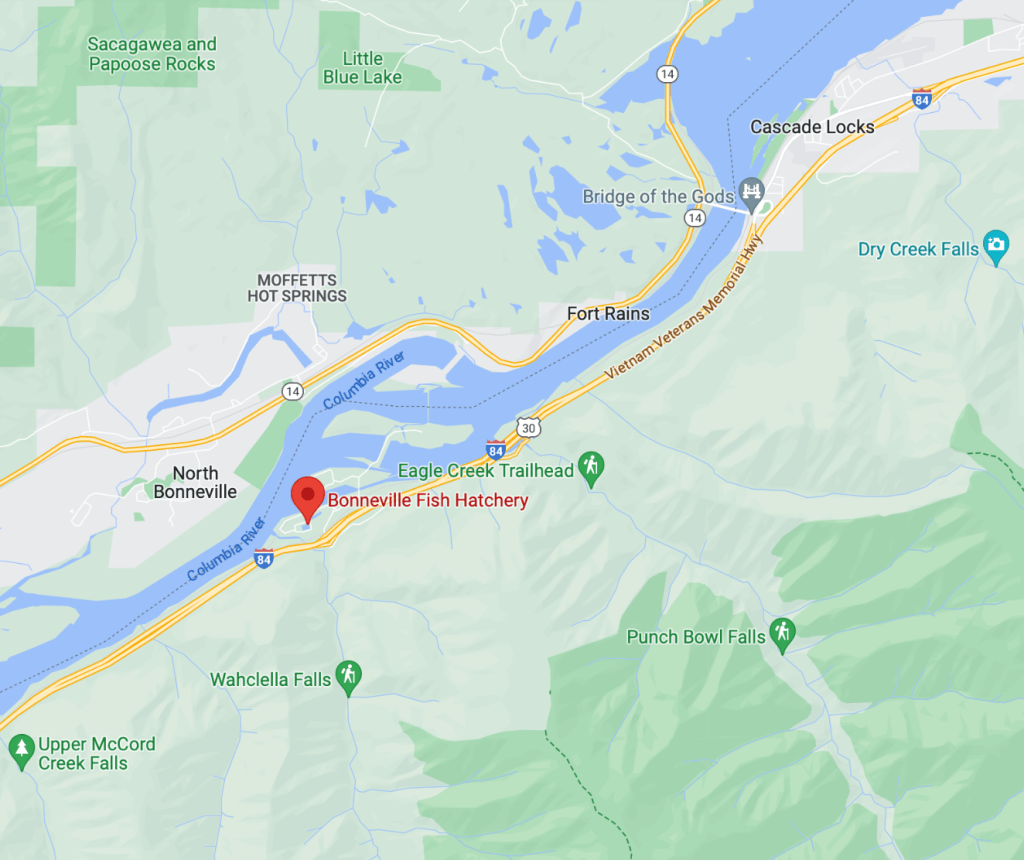
We pass by downtown Portland and join Interstate 84, travel 30 miles passed Gresham and Troutdale into the the beautiful Columbia River Gorge. We pass Rooster Rock, named by Lewis and Clark, and the 600 foot Multnomah Falls. We leave the interstate at Exit 40 and idle into the hatchery, set up our camp and say howdy to our co-hosts Mike and Sue who have been here since May. Mike and Sue are full time RVers who winter in Arizona. We also see familiar faces, Hugh our boss, and Dan, everyone’s boss. Deanne is still here as well as Scott, Bergie, and Taylor but many new faces too. The weather is warm, even humid, with highs in the low 80’s with occasional sprinkles.

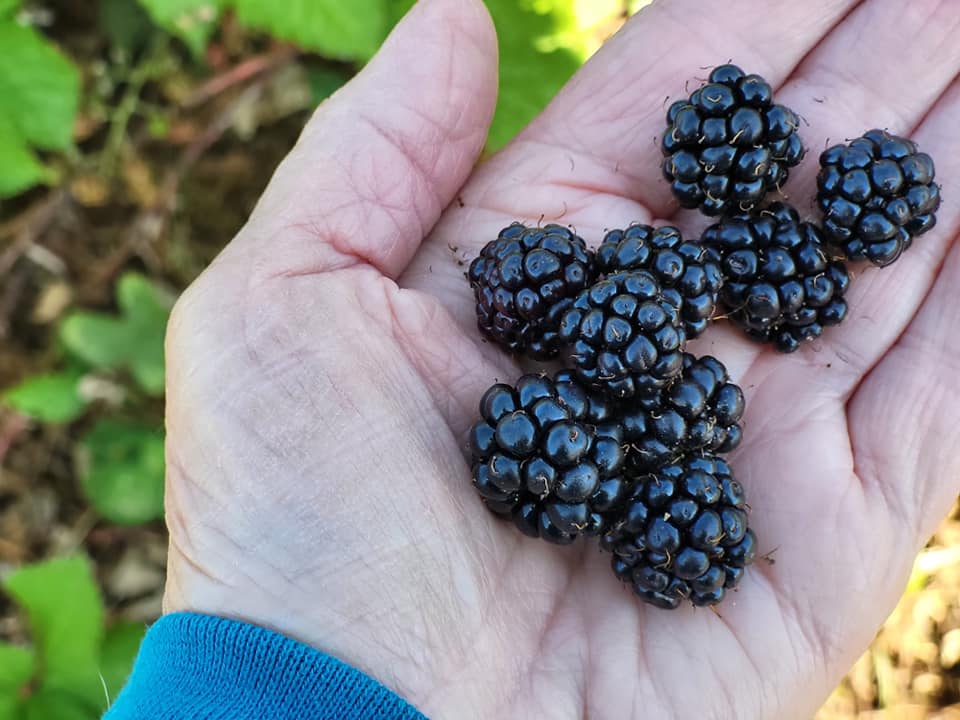
Our site, number 2 located along side Tanner Creek is a large wedge shaped site. One side is bordered by the creek, the water channels and old hatchery equipment separated from us by a fence oppostite the creek. Towards the fish ladder is over 100′ of Himalayan Blackberries which are just loaded with ripe and new berries. We fill our freezer with freshly picked berries. Taylor’s folks come down and pick a bunch to take home. There’s more than enough berries for anyone who wants to pick them.

Our job is the same as it has been for the many times we have volunteered here. Help with landscaping chores and when the fall salmon run starts, help the fish guys and gals with spawning. The run should start in a couple of weeks. Meanwhile we have plenty to do deadheading flowers, watering potted plants, watering dry areas in the planter islands and anything else that assists Hugh, the groundskeeper. He supplies gardening tools and a Toro utility vehicle that currently has a 40 gallon water tank/pump/hose and wand set up installed on it. We also empty the numerous trash cans that a strategically placed around the campus and police the restrooms and large parking lot.

To keep the place tidy we also use blowers to round up leaves on the streets and public areas and dispose of them. There’s always a special project going on around here so we never run out of things to do. We are on duty 4 days, 5 hours a day, then 4 days off. Jil and I never seem to take our full four days off as we get bored. Sometimes we’ll take time to go grocery shopping or take a nice drive up into the forests. We like to visit the nearby lava beds and drive up to an overlook that offers a spectacular view of the southeast side of Mt. St. Helens. We’ll probably do that since we’ll be here a couple of months.

The hatchery hosts special projects on occasion. A few years ago it was rearing salmon with special DNA for an Idaho Native American tribe. Today the Columbia River Inter-Tribal Fish Commission (Nez Perce, Umatlla, Warm Springs, Yakima tribes) is using a building as home base to bring captured lamprey to store until they can be transported above the Bonneville Dam. You see, lamprey are part of those tribe’s ceremonial food and the lamprey’s number are depleted above the dam. The Commission is hopeful that giving the lamprey a free ride past the dam that their numbers will increase. Lamprey have been on earth longer than dinosaurs at 410 million years, in fact, as long as trees and insects!

Lamprey can be 31 inches long, are often found at sea or often far offshore. They spend most of their lives as larvae (Ammocoetes) which live in fresh water for 3-7 years. The ammocoetes are filter feeders that dig burrows into soft bottom substrates. The undergo metamorphosis and take on the juvenile/adult body morphology. The juvenile/adults have a jawless, sucker-like mouth that allows them to become parasitic on other fish and sperm whales, attaching themselves with their suckers and feeding on blood and body fluids. They typically spawn in a similar habitat as pacific salmon or trout. They construct nest in small gravel in which the females can lay 100,000 eggs. The pacific lamprey is not the same fish as the sea lamprey that has invaded the Great Lakes.

I’ll be writing again in the near future. Hopefully I’ll have more to share with y’all.

Tillamook, Oregon

Monday, July 29, 2023

We are heading up to Tillamook today. It’s only 80 something miles to our next campsite yet it will take us 3 to 4 hours to get there. The reason? The road is not conducive to warp speed travel, especially in an RV and we plan on seeing some sites along the way.

We pass through what seems to be endless forest emerging occasionally to views of the sea that include state recreation areas and state parks. First up is Brian Booth State Park, a day use park, then the ever popular South Beach State park that does offer camping as well as day use. Across Yaquina (pronounced Yaqwinna) Bay from the park is Newport (10,890 souls). We visited Newport a few days ago so we continue on.

A short ways up the road is Beverly Beach State Park, equally popular with South Beach. We pass viewpoint after viewpoint as our equipment doesn’t fit in most parking areas and the views are obscured by fog. They go by the names of Otter Crest Scenic Viewpoint, Devil’s Punchbowl, Finger Rock, Rock Creek Scenic Viewpoint. We’ve traveled the coast many times and have visited most of these sights so we aren’t sorry for bypassing these beautiful areas of the Oregon Coast.

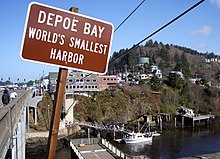
We arrive in Depoe Bay (1800 souls), known as the whale watching capital of the Oregon Coast. It’s also considered the coolest town on the coast as the hottest day of the year is only 68 degrees!

And another thing its known for- it’s home to the smallest active harbor in the world at 6 acres! The town was named for Charley Depot, a Siletz Indian.

Next comes Lincoln City (9815 souls). It seems like once you enter the city you will never drive out of town it’s so long! We catch a glimpse of 685 acre Devil’s Lake, a popular place with boaters and campers.

Overlooking Cape Kiwanda on the Oregon coast.
Cape Kiwanda

More Oregon State Beaches pop up along the way, the the Nestucca Bay National Wildlife area. We pass through Pacific City (1019 souls), the city’s main attraction is the Cape Kiwanda State Natural Area. The Nestucca Valley includes the farming oriented towns of Cloverdale (242 souls), Hebo (241 souls) – Chinese for Lord of the River, Beaver (122 souls), Blaine and Hemlock in this beautiful farming area.

We come to Tillamook (5231 souls), named for the Tillamook people. The first recorded European landing occurred in 1788 with settlers arriving in the 1850’s. During WWII the Navy operated a blimp station near town at the Naval Air Station Tillamook which now houses the Tillamook Air Museum and remnants of the naval base. The region has five rivers.

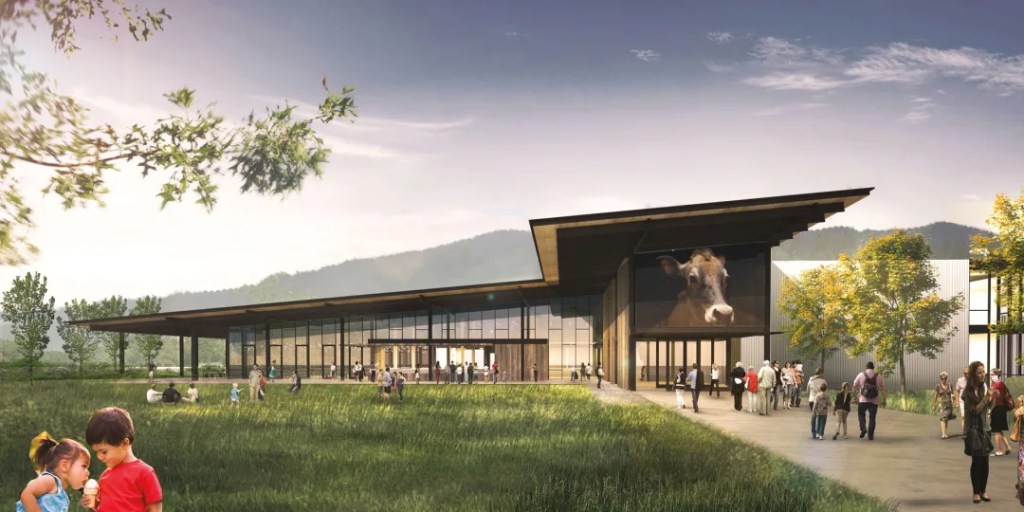
Tillamook Creamery Visitor’s Center

The town’s economy relies of dairy farms with milk cattle supplying the Tillamook County Creamery Association‘s production of cheese, gourmet ice cream, yogurt and other dairy products. Approximately 1 million people visit the Tillamook Cheese Factory every year. The lumber industry is also making a come back in the area.

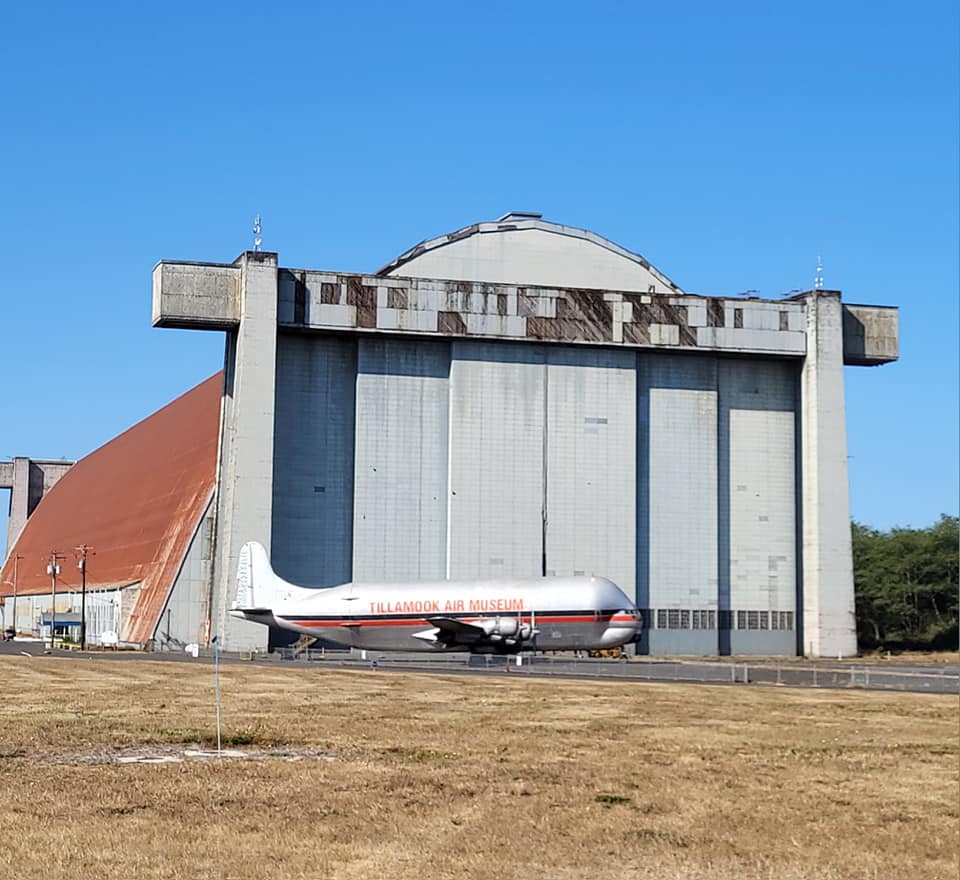
Blimp Hanger B along with some WWII machinery

The Tillamook Air Museum is housed in the last remaining blimp hanger, Hanger B. In 1942 the Navy began contruction on 17 wooden hangers to house K-class blimps that would be used for anti-submarine patrol and convoy escort. Two of these hangers were built in Tillamook. Hanger B was completed in August of 1943 and Hanger A was completed in only 27 working days. Eight airships were housed here. Hanger A was destroyed by fire in 1992. Each ship was 252 feet long, 80 feet in diameter and had a range of 2000 miles. The air station was decommissioned in 1948. The hangers measured 1072 feet in length, 296 feet wide, 192 feet high for an area of 7 acres or 6 football fields and could house eight blimps!

We stayed at Misty River RV Park, about 4 miles up the Wilson River from town. The park caters to full timers it seems but is quiet. The park has two large dog runs conveniently located across from our site. The RV sites are well spaced at the west end of the park but a little more crowded near the entrance. It was an OK stay with one exception- our power supply was pretty shakey dropping all the way down from 120 volts to 90 volts. The low voltage can do great harm to expensive components of RV’s- A/C units, heater blower motors and residential refrigerators are particularly suseptible. None of these appliances are cheap. Glad we caught the low voltage before it did any apparent harm so we could discontinue their use or augmenting their power with our on board generator as necessary.

We’ll be heading to our home for the months of August and September. We’ve hosted at the Bonneville Fish Hatchery many times. This may be our last volunteer stint as we are close to aging out and still have some traveling to do.

See y’all at the Bonneville Fish Hatchery!