
Monday, August 7, 2023
We arrived at the Bonneville Fish Hatchery on July 31st, a day early. Our site #2 was open and Misty River RV Park electrical power was not good so we decided to come in a day early. We left the Tillamook area and headed east on Oregon Highway 6 following the Wilson River Canyon for quite a ways. It was a pretty heavily wooded drive, the highway was busy so we pulled over several times to allow traffic to pass us.
I was planning on stopping for fuel in Banks, Oregon, a town of 1960 souls. Banks is known as the Gateway to Outdoor Adventure. Diesel is $4.80 a gallon there. Never having traveled this highway I missed the turn off. We turn east on US 26. Jil looks up a Chevron station in Hillsboro (106,447 souls). It’s a lot tighter getting into the station and a ton more traffic than the one in Banks but doable. Fuel is 29 cents more a gallon in a much larger town- gads. Luckily we only needed 60 gallons so $30 increase in price over that of the Banks Chevron. We filled the tank for a mere $300.
Hillsboro (106,447 souls) is located in the Tualatin Valley and is the fifth largest city in Oregon, and is located on west side of the Portland metropolitan area. The city hosts many high-technology companies and is known locally as the Silicon Forest. The valley was home to native Americans who found the region suitable for fishing, hunting, food gathering and agriculture. Agriculture is still a large part of the economy here. Hillsboro is also home to the Little People TV show.

Soon we join the thundering herd in the heart of Portland (652,503), the most populous city in Oregon. Approximately 2.5 million people live in the Portland-Vancouver- Hillsboro OR-WA metropolitan statistical area. Located at the confluence of the Columbia and Willamette Rivers, water access provides convenient transportation of goods with the timber industry a major force in the city’s economy. This beautiful city had a reputation as one of the most dangerous port cities in the world, a hub of organized crime and racketeering. Beginning in the 1960’s Portland has been noted for its growing liberal and progressive political views. As such, many eastern Oregonians are seriously talking of secession from Oregon and starting a more conservative state. As with many places in the U.S., the largest cities tend to be more liberal and also outnumber the more rural folks so their votes are more likely to prevail over the wishes of the more conservative country folk.

We pass by downtown Portland and join Interstate 84, travel 30 miles passed Gresham and Troutdale into the the beautiful Columbia River Gorge. We pass Rooster Rock, named by Lewis and Clark, and the 600 foot Multnomah Falls. We leave the interstate at Exit 40 and idle into the hatchery, set up our camp and say howdy to our co-hosts Mike and Sue who have been here since May. Mike and Sue are full time RVers who winter in Arizona. We also see familiar faces, Hugh our boss, and Dan, everyone’s boss. Deanne is still here as well as Scott, Bergie, and Taylor but many new faces too. The weather is warm, even humid, with highs in the low 80’s with occasional sprinkles.

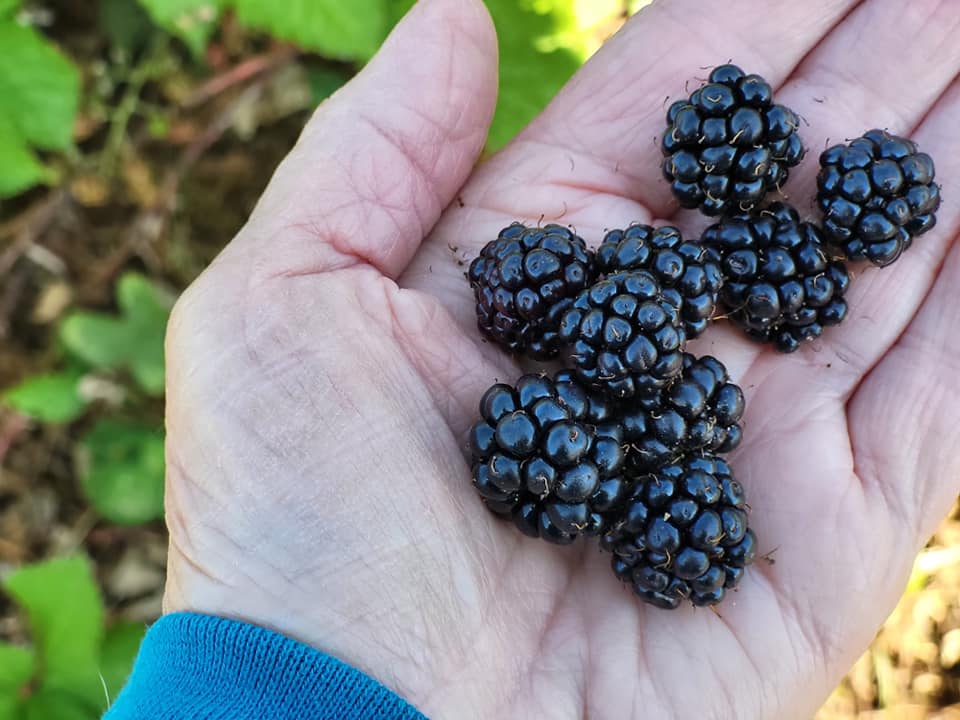
Our site, number 2 located along side Tanner Creek is a large wedge shaped site. One side is bordered by the creek, the water channels and old hatchery equipment separated from us by a fence oppostite the creek. Towards the fish ladder is over 100′ of Himalayan Blackberries which are just loaded with ripe and new berries. We fill our freezer with freshly picked berries. Taylor’s folks come down and pick a bunch to take home. There’s more than enough berries for anyone who wants to pick them.
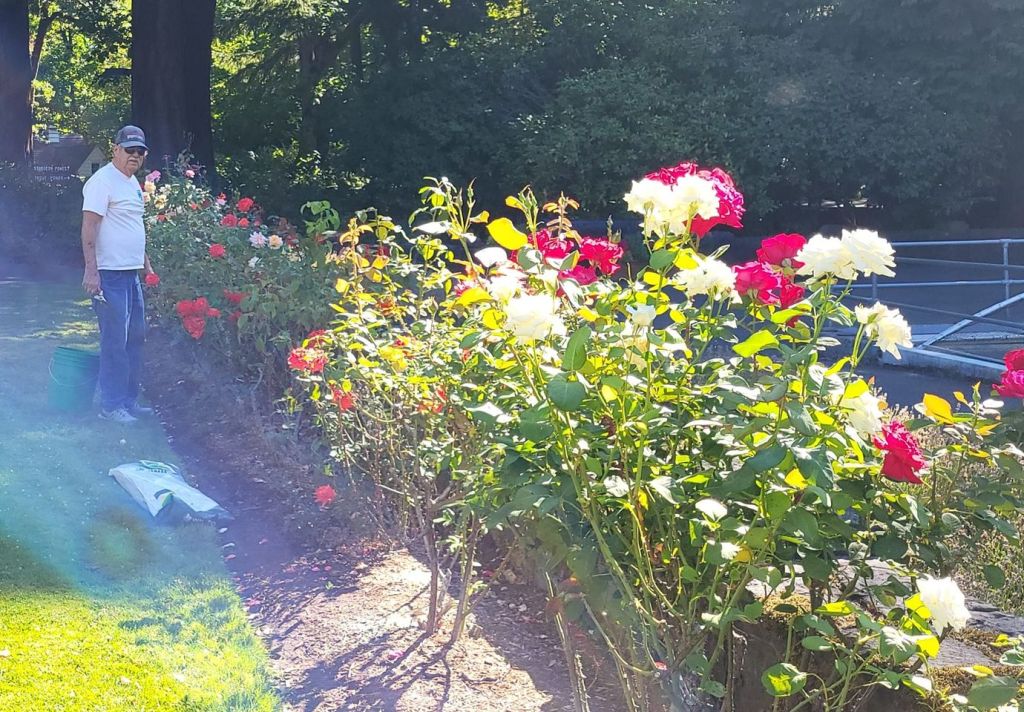
Our job is the same as it has been for the many times we have volunteered here. Help with landscaping chores and when the fall salmon run starts, help the fish guys and gals with spawning. The run should start in a couple of weeks. Meanwhile we have plenty to do deadheading flowers, watering potted plants, watering dry areas in the planter islands and anything else that assists Hugh, the groundskeeper. He supplies gardening tools and a Toro utility vehicle that currently has a 40 gallon water tank/pump/hose and wand set up installed on it. We also empty the numerous trash cans that a strategically placed around the campus and police the restrooms and large parking lot.
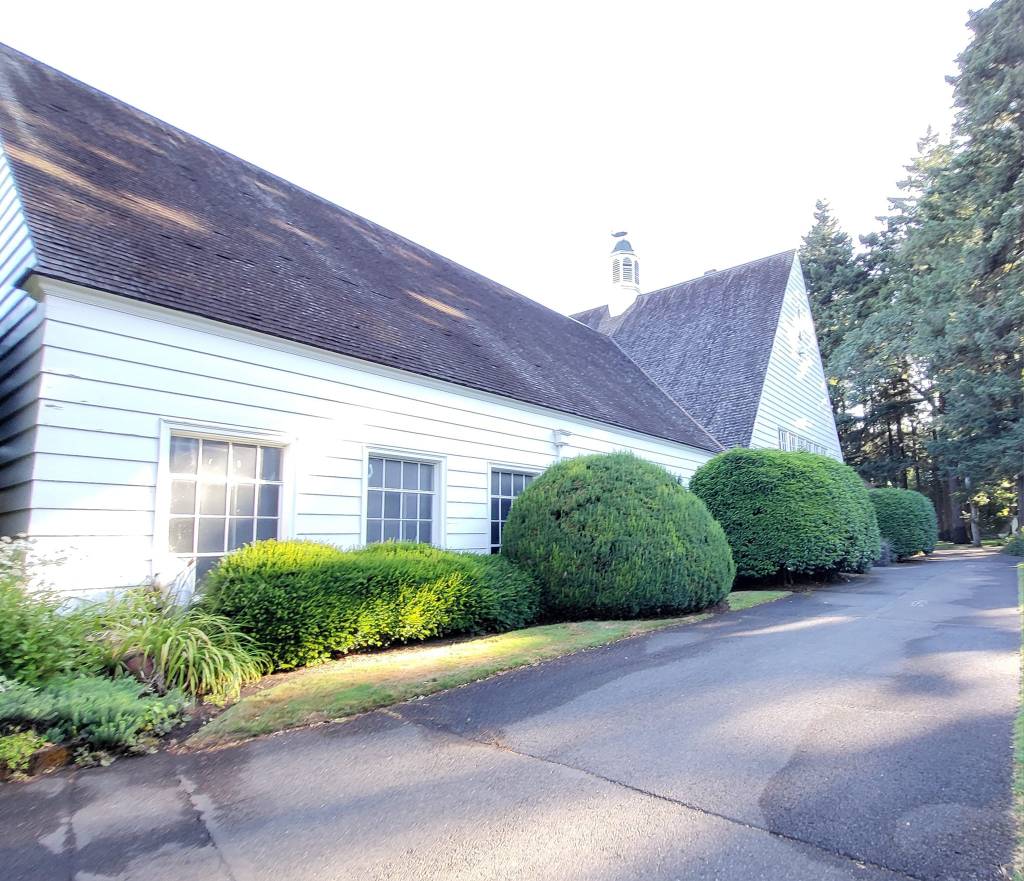
To keep the place tidy we also use blowers to round up leaves on the streets and public areas and dispose of them. There’s always a special project going on around here so we never run out of things to do. We are on duty 4 days, 5 hours a day, then 4 days off. Jil and I never seem to take our full four days off as we get bored. Sometimes we’ll take time to go grocery shopping or take a nice drive up into the forests. We like to visit the nearby lava beds and drive up to an overlook that offers a spectacular view of the southeast side of Mt. St. Helens. We’ll probably do that since we’ll be here a couple of months.

The hatchery hosts special projects on occasion. A few years ago it was rearing salmon with special DNA for an Idaho Native American tribe. Today the Columbia River Inter-Tribal Fish Commission (Nez Perce, Umatlla, Warm Springs, Yakima tribes) is using a building as home base to bring captured lamprey to store until they can be transported above the Bonneville Dam. You see, lamprey are part of those tribe’s ceremonial food and the lamprey’s number are depleted above the dam. The Commission is hopeful that giving the lamprey a free ride past the dam that their numbers will increase. Lamprey have been on earth longer than dinosaurs at 410 million years, in fact, as long as trees and insects!

Lamprey can be 31 inches long, are often found at sea or often far offshore. They spend most of their lives as larvae (Ammocoetes) which live in fresh water for 3-7 years. The ammocoetes are filter feeders that dig burrows into soft bottom substrates. The undergo metamorphosis and take on the juvenile/adult body morphology. The juvenile/adults have a jawless, sucker-like mouth that allows them to become parasitic on other fish and sperm whales, attaching themselves with their suckers and feeding on blood and body fluids. They typically spawn in a similar habitat as pacific salmon or trout. They construct nest in small gravel in which the females can lay 100,000 eggs. The pacific lamprey is not the same fish as the sea lamprey that has invaded the Great Lakes.
I’ll be writing again in the near future. Hopefully I’ll have more to share with y’all.
 Travel With Jil and Mike
Love the description of the gorge and the info on th lamprey. As usual, your writing is so well done to keep us entertained.
LikeLike
Thanks Linda. I like to add historical and interesting facts as they present themselves for my own information and for my readers.
LikeLike