
Saturday, August 24, 2024
I found the above image on the internet. It shows the hatchery in relation to the rivers, creeks and Interstate 84. Tanner Creek Fishery is at the confluence of Tanner Creek and the mighty Columbia River. Hatchery volunteer hosts help maintain most everything in this photo. Our campsite is approximately at the letter “T” is Tanner Creek, center bottom of graphic. Not as clear is the railroad viaduct that runs 100′ away from our site and parallel to I-84.. We’ve gotten used to the racket trains make when they pass by. Our site is located in an employees only area, remote from public areas with fences, adult salmon water channels and pools between us and them. It’s a very private spot interrupted only by occasional employees who need to access this portion of the hatchery. Our boxer mustzos love it because they can romp leash free and not bother anyone.
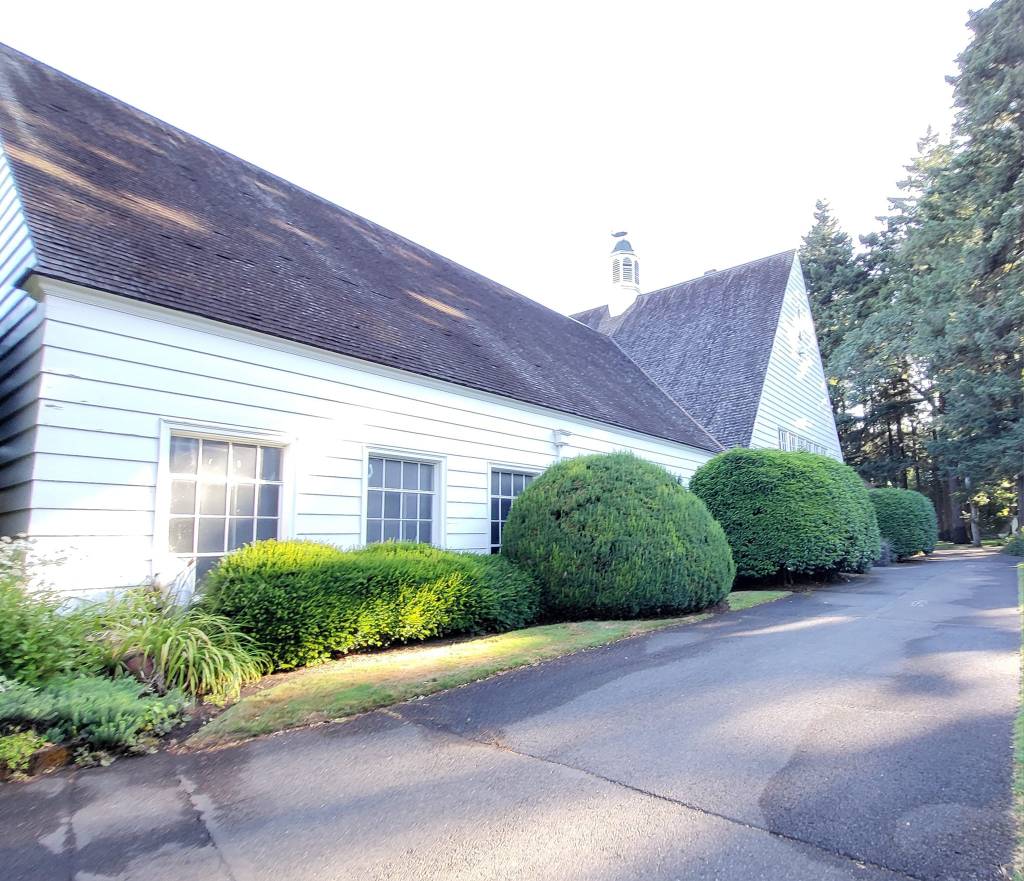
Historic egg incubation building
I thought I’d give you an overview of a hatchery hosts duties. The hatchery volunteer hosts are hired and guided by the groundskeeper Hugh. We work a four on, four off schedule 20 hours a week per volunteer.

Jumping Fish Water Fountain
Our daily duties include keeping the grounds clear of downed tree limbs, picking up the occasional wayward piece of trash, making sure the jumping fish water fountain is clean, that the coin fish food dispensers are working properly, that the trout ponds don’t have any dead trout (morts), and the parking lot is clean. Before our work shift is over we go around and check all the trash cans. If they are full or have a bunch of smelly stuff in them we’ll change out the bags for fresh and dump the offending bags in the dumpster. We also open the visitors center doors before 0700 hrs so our work day starts then and ends around 1700 hrs. We usually don’t work all of those hours taking a break or two. i’d say we give the State of Oregon a good 5-6 hours each work day.

We use the heck out of the Toro Workman
On top of the afore mentioned duties we print adequate amounts of literature to display in the visitors center, weeding and dead heading in the flower gardens, draining, cleaning and refilling 2 display pools with fresh water. We water the many flower pots scattered around the grounds. And then there’s the leaves and conifer needles. This time of years it’s mostly conifer needles. Blow ‘um into a pile, pick ‘um up and dispose of them only to come back two days later and have the area full of needles once again. Occasionally we will use power tools to cut up branches, trim hedges remove hazardous tree limbs. And then there’s our trusty Toro Workman utility vehicles without which our jobs would be much more difficult.


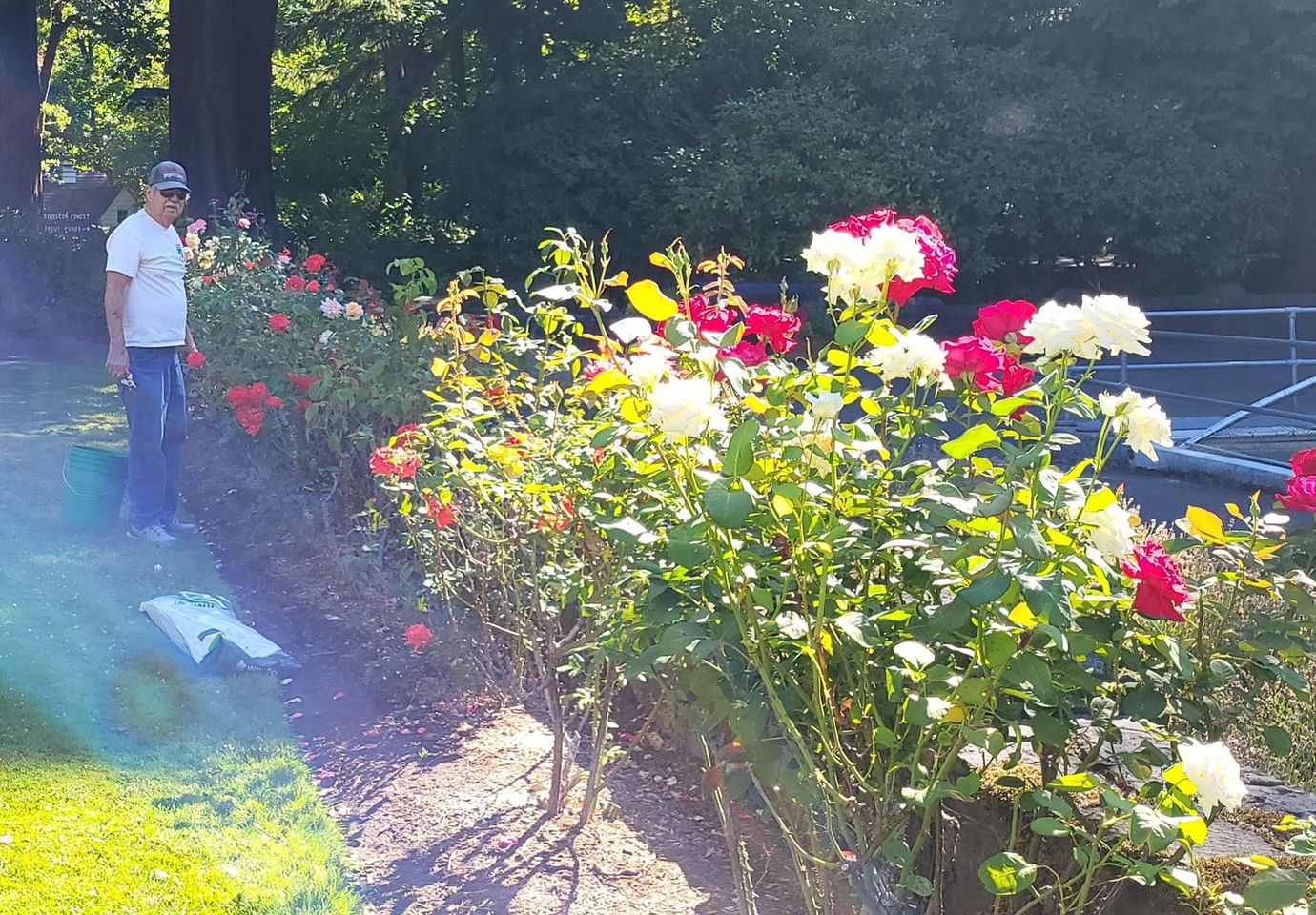
The lovely hatchery grounds
One aspect of our job is to interact with guests. This is a salmon hatchery and it always amazes me that a lot of local folks haven’t a clue of the life cycle of the fish. Them- “Do you let the fish go after they spawn?” Us- “No. Salmon always die after they spawn. They are humanely euthanized before being spawned, the process being the female’s egg sac is cut open and the eggs drop into a bucket”. We explain how the salmon eggs are collected, fertilized, incubated until hatching and that as many as 250,000 fingerlings are placed in one of the upwards of 48 rearing ponds. We keep and feed them for about a year or until they are large enough for their journey to the ocean. They will return in 3-5 years to the place they were born and will die here. “So, how do you know they are hatchery raised salmon? When youngsters the fish taggers set up their trailer near the rearing ponds. The palm sized salmon are pumped into the trailer where the taggers clip off the adepose fin and place a metal tag in the snout of some of them.” It goes on and on but those are the most popular questions.
The hatchery is located right off of I-84 about 4 miles west of the burg of Cascade Locks (1385 souls). This is a great link to Cascade Locks- https://www.cascade-locks.or.us .Portland, OR (652,503 souls) is 35 miles to the west. People use the hatchery not only as a wonderful place to visit but a rest stop. The hatchery receives 1,000,000 visitors a year. The grounds are wonderful. A short walk past the immense incubation building takes one to the Herman the Sturgeons’ pond, upper and lower trout ponds, the small white sturgeon pond.

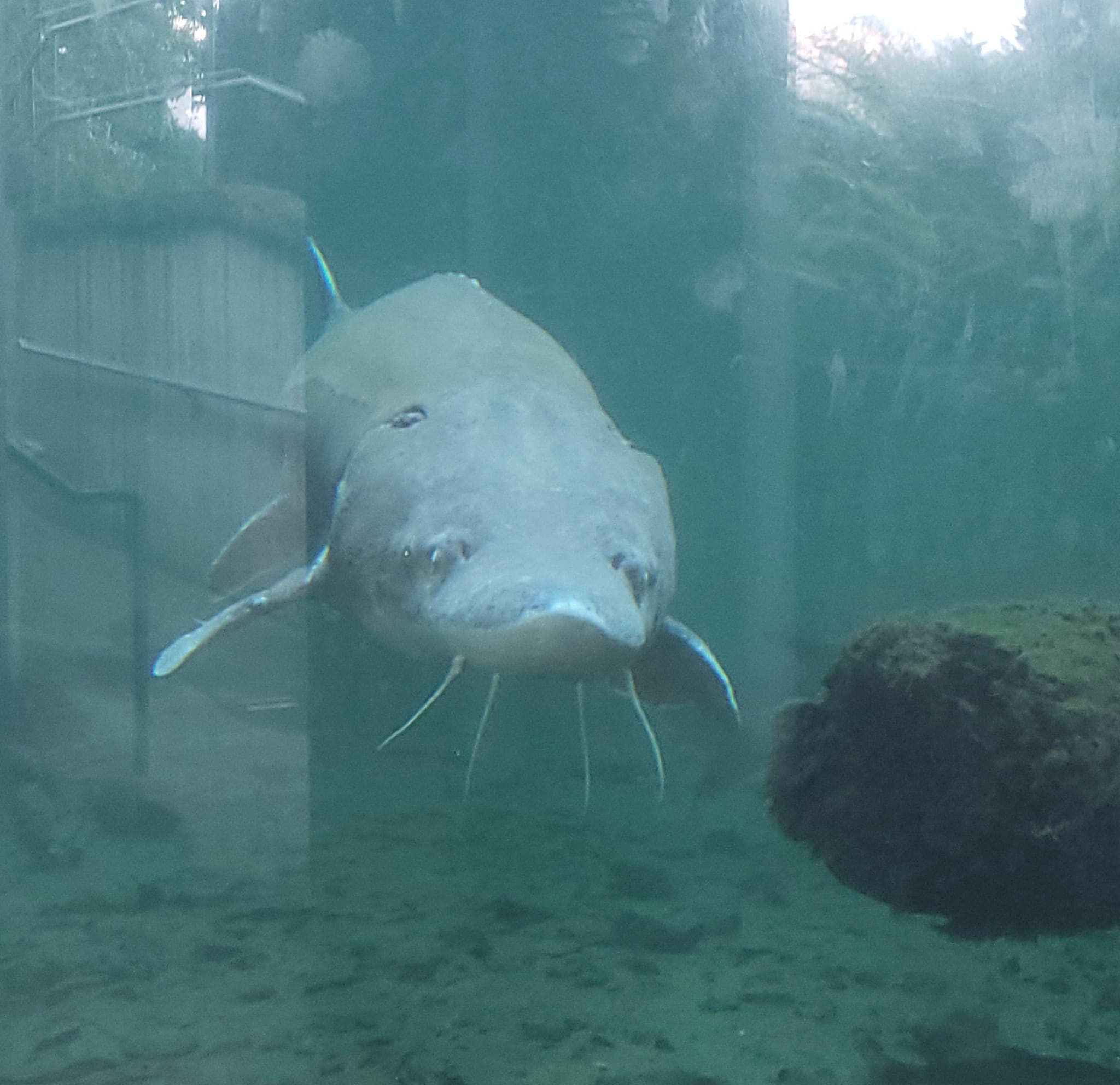
Herman the Sturgeon’s house. He’s 11 feet long and 500 pounds
These areas are surrounded with beautiful natural looking gardens, trees and lush lawns. The ponds themselves are beautifully designed. The rest of the hatchery does not have as much nature but still has turf islands with trees offering their shade, 3 batteries of fingerling ponds and then the office/visitors’ center followed by the mechanical room. The groundskeeper has a garage near the turf islands as well as a utility building which is currently being used by personnel who are collecting lamprey from the river and redistributing them in the hope that their numbers will increase.
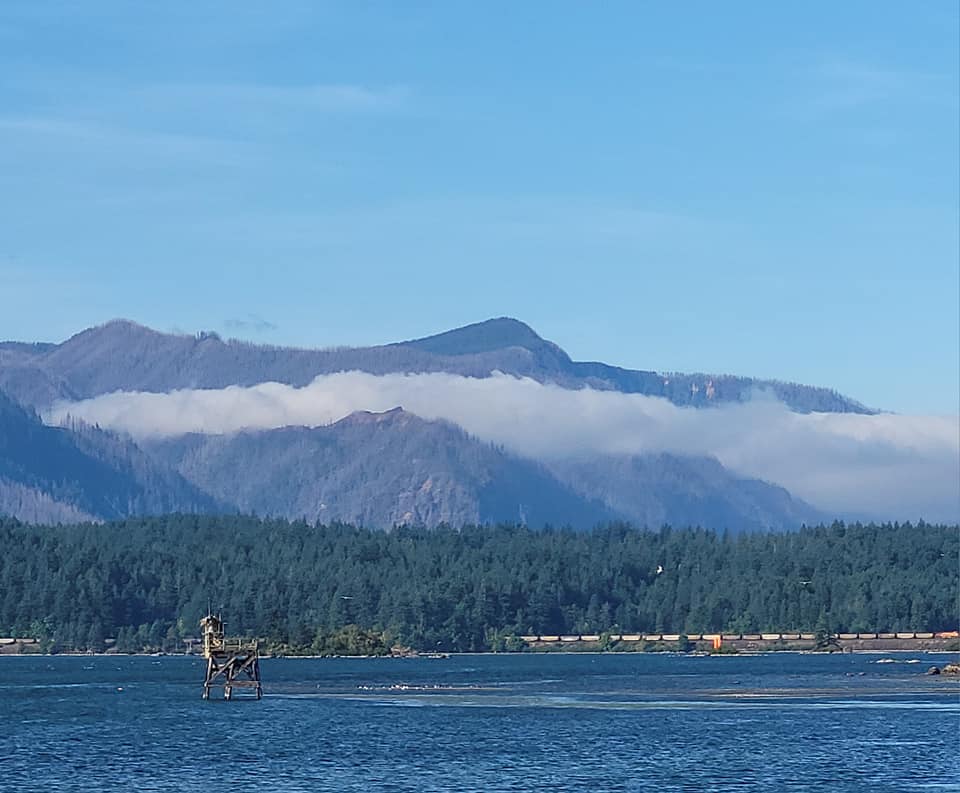

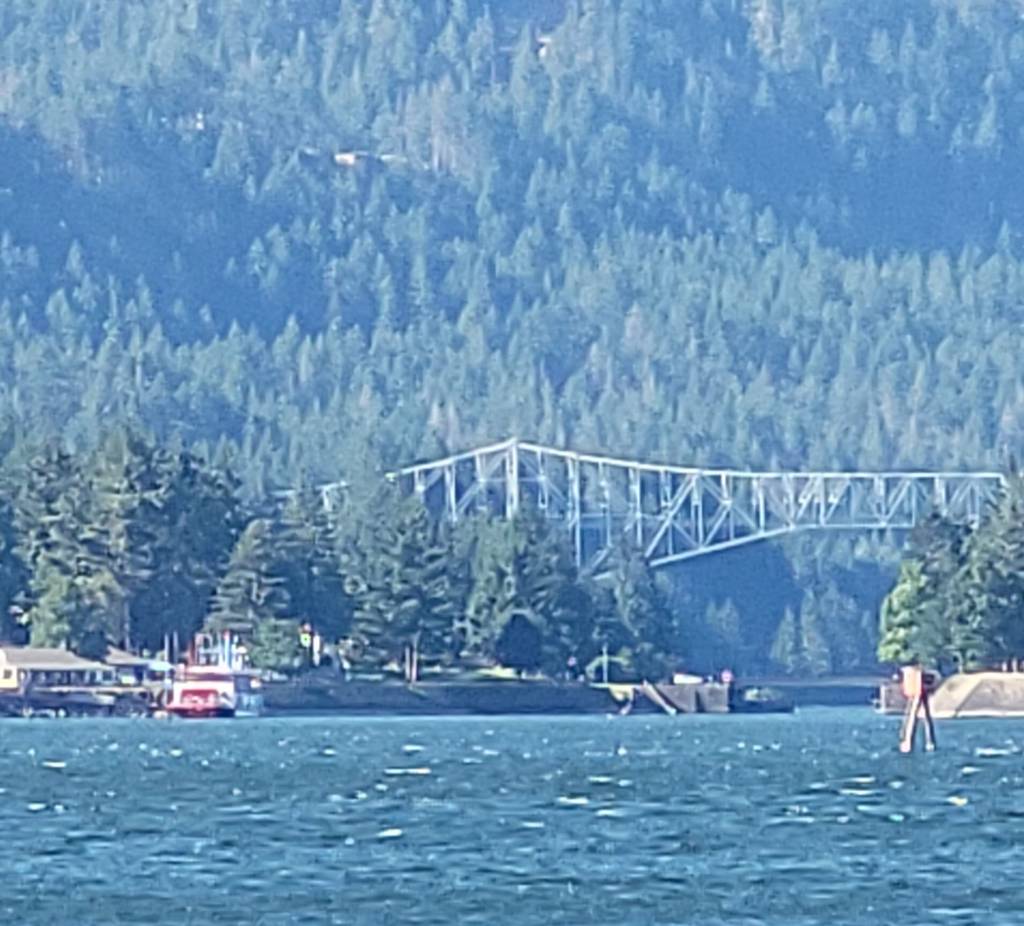


As one can see not all the beauty is on hatchery grounds. The Columbia Gorge is one of the most beautiful places we’ve been, and we have traveled extensively both in the USA and Canada.
There is so much information to share I’ll try to present the highlights in coming blog posts. Until then, be safe out there.

Probably my most loved fall photo of the hatchery (Mitchell Creek) with high peak in background.
 Travel With Jil and Mike
My gosh! I had no idea just how many duties you performed. How ever will they replace you????
LikeLiked by 1 person
They will find someone willing to do the work. It’s not all work and the area is ripe for exploration!
LikeLiked by 1 person
I hope you will continue to enjoy traveling 🙂
LikeLiked by 1 person