Wednesday, August 30, 2017- Travel Days 24-26

I spent a couple of hours writing this post, the text disappeared somehow and all that remained was the photos. So I’ll try this once again.
We traveled less than 100 miles from Buffalo River State Park to Itasca State Park. Jil’s “smart phone” calls out the route: East on hwy 10, northeast on hwy 34, north on 37, east on 58 to east 44 to east 41. Then the “smarty pants” phone makes a call to turn too late. Crap! Oh well, I’ll just drive down the road and find a place to turn around. What’s that ahead? It’s highway 71 which will lead us to Itasca’s park entrance. Gosh, that was easy. All we really had to do was take highway 10 east to the 71 and head north! At least the route we took avoided almost all semblance of civilization except for some beautiful farms and a couple of ranches. The only town being Detroit Lakes (8000 souls) which we past in the beginning and Two Inlets near the end- which is not really a town but a gateway to several recreational lakes. The only place Jil wanted to visit was Park Rapids which has become the gateway city of Itasca State Park.
Itasca is the oldest of the Minnesota state parks. The park was established in 1891 to save the region from logging. It is also the headwaters of the Mississippi River- the reason we visit. The park is heavily forested and the campground is nice. Electricity is offered at many sites but not water or sewer.. A dump station and fresh water are available.


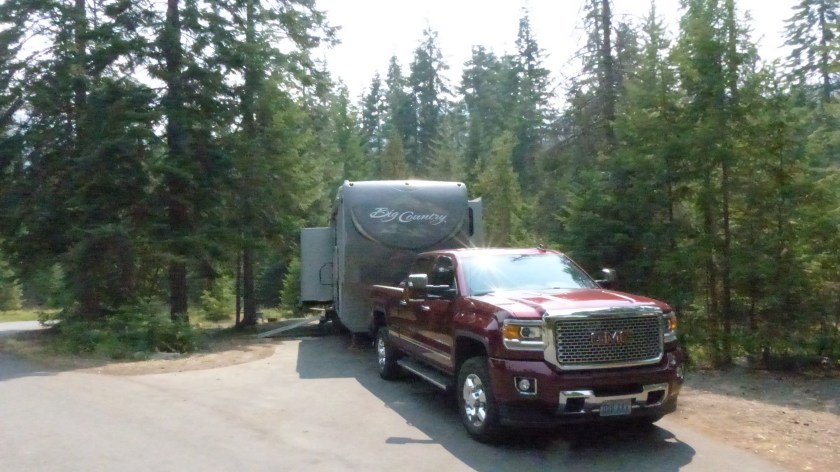
Narrow, twisting access roads with big tree branches overhanging the road make maneuvering our 51′ combo a little challenging. The park is very popular as it offers many amenities such as cabins, a lodge, multiple campgrounds and of course, the headwaters of the Mississippi River.


From Lake Itasca we traveled again on highway 71 to US 2 all the way to Grand Rapids MN, not the more well known Grand Rapids, MI. Grand Rapids is a town of just over 10,000 folks. We pass Cass Lake (770 souls) , once a mighty lumber town of 2100, the town now relies more on tourism and recreational activities. Its the headquarters of the Minnesota Chippewa Tribe and Leech Lake Band of Ojibwa. We stretch our legs the rest stop that overlooks Cass Lake. What a great stop!
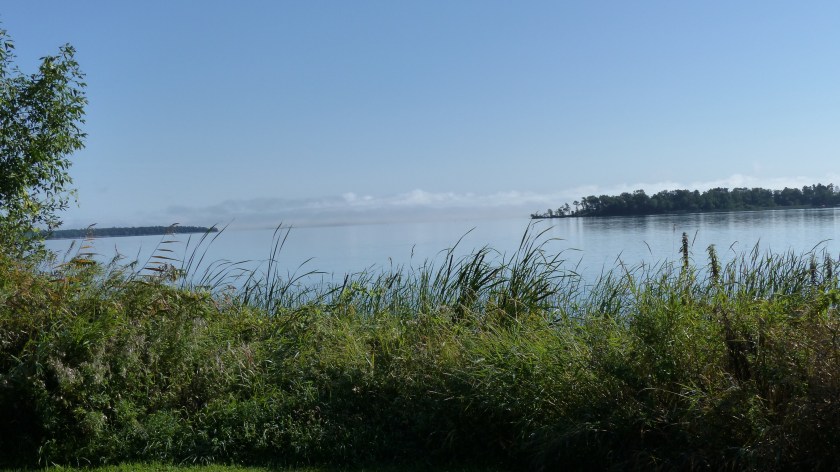
Cass Lake as Seen From The Cass Rest Stop
An interesting place we past through between Cass Lake and Grand Rapids is the little burg of Ball Club. As we roll into town I see the sign announcing “Ball Club”. I thought it a very large sign just to give directions to the local ball club, and in what sport might that club specialize? Well, Ball Club is a town of 340 souls named after a type of Native American lacrosse stick. Who knew?
We pass a few other towns, and not so towns but wide spots in the road that happen to have a couple of human built structures. No info on those small places on the internet.
We pull into our home for two nights- Pokegama COE campground. It’s located adjacent to the Pokegama Dam. The original dam was built in the 1880s to provide flood control, navigation and drinking water. It was rebuilt at the turn of the 20th century. What a beautiful beautiful place to camp.


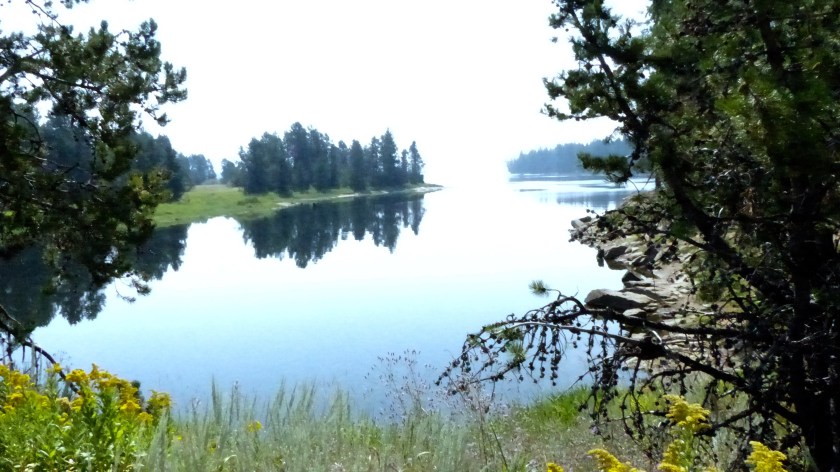
The campground is all mowed grass, the site pads are gravel. Trees provide a canopy of shade……. and our site is located no more than 50′ from the Mississippi River!
OK, so the downfall of camping in the beautiful state parks and the COE campground is- no laundromat. We have accumulated a weeks worth of soiled clothing and are presently wearing our last pair of clean chonies. The laundromat that was recommended is not cheap. $6.75 for one washer- two needed. Dryers $3.00 a pop times two, eventually three since two drying cycles wasn’t enough to dry all of our clothes. So $22.50 later we leave with clean clothes.
Grand Rapids was the end of the line for river boats. It’s three mile long rapids prevented further upstream navigation. The rapids are now drowned by a dam built to support the Blandin Paper Mill. And the Pokegama dam kind of finished off large vessel navigation until one reaches Pokegama Lake. Grand Rapids is the seat of Itasca County. She has just over 10,000 souls living here. If we had more time we’d explore the area more thoroughly.


Tomorrow we head to our first Great Lake- Lake Superior. See you there!
 Yesterday we traveled 115 miles to Buffalo River State Park. We are now in our second new to us state- Minnesota. As we cruised east the hills got a little smaller and the northern plains became more evident. Again we see large fields of crops, a checkerboard of corn, sunflowers, maybe some wheat and alfalfa. We travel quite a distance without seeing cows, then spot one that had gotten past the barbed wire fencing and was laying on the side of the road. We are used to seeing raccoons, deer, even porcupines and armadillos in the South but hardly ever cows.


 August 22, 2017- Travel Day #19


 When approaching Hebron we see a sign. “Fort Sourkraut Next Exit”. Fort Saurkraut? Ya gotta be kiddin’ me. No, they are serious. Fort Saurkraut was raised in three days by settlers interested in saving their hides from Indian attack. The fort was built out of sod with (stolen) railroad ties for roof support. It was then surrounded by barbed wire in the hopes that it would deter the rumored attack. The Indians never planned on attacking the settlement, the attack never came. Fort Saurkraut (so ya think there were a lot of Germans in this town?) is the only sod fort ever built in North Dakota. The fort was recreated a few years ago by dedicated farmers in the hope that “If we build it, they will come”. I don’t know how that worked out for them………






 August 19, 2017- Trip Day #17




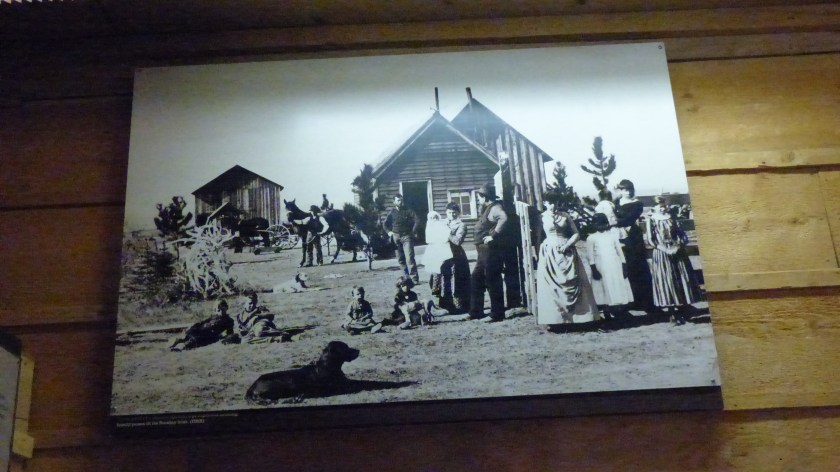
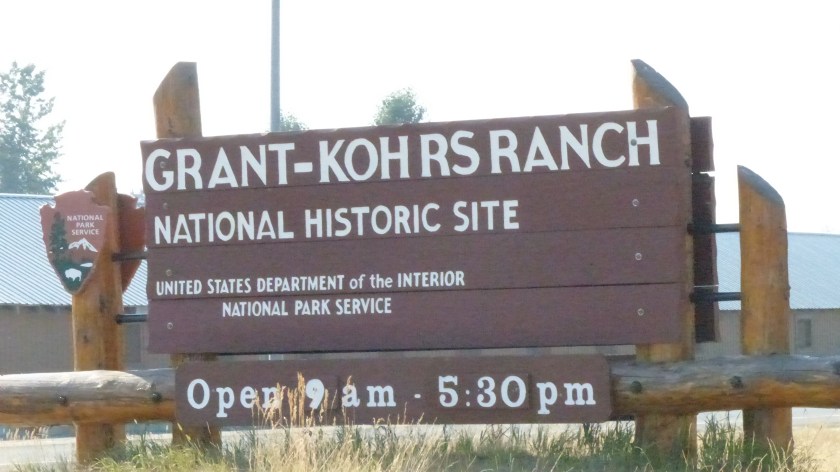 Conrad Kohrs opened a butcher shop. Grant build a 4000 square foot house in 1862 and 5000 square feet was added to that home by Kohrs in 1890. Augusta Kohrs salvaged the bug ridden house in a “war of extermination”. Over time she acquired the finest things in life, luxurious furnishings, Pershian rugs, the finest china.
  The ranch house is open to the public as are the grounds. When we visited a volunteer fella had a chuck wagon on display and offered us cowboy coffee he had made over the campfire. A blacksmith was busy making andirons in the blacksmith shop. And Miles, a volunteer cowboy was mounted on Fox, a quarter horse who lives on the ranch. We enjoyed the information that the knowledgeable volunteers and Rangers shared, and the ranch is beautiful.


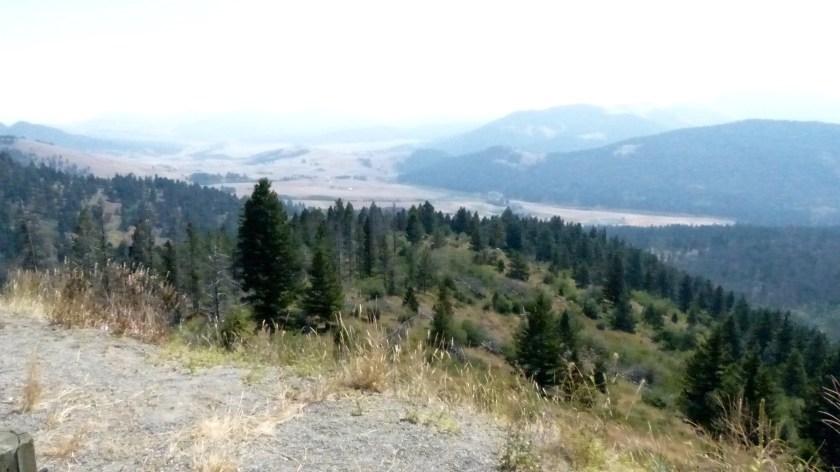










 We also say goodbye to Idaho at that point and enter Montana. The road on the east side of Lolo pass is much smoother, wider and a more gentle slope as it follows Lolo Creek down towards the town of Lolo. We pass numerous ranches and more than a few fire camps and fire drop points. We meet momma moose standing on one side of the highway looking towards the other. She’s waiting for her baby. The few motorists stop and wait for baby to catch up. Then they disappear into the woods. We are still on the path that Lewis and Clark took in 1805 but I think we have it much easier than they. No paved roads for them and no gigantor home on wheels either!


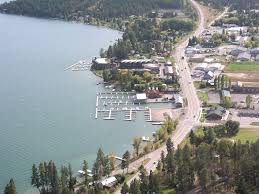
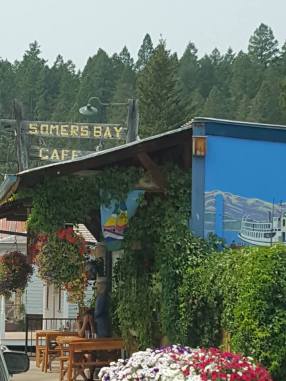
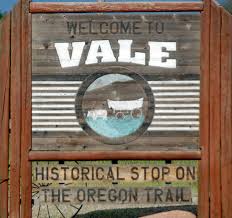
 We left McCall and headed northwest on Highway 55. We’ve been on Mountain Time since we left Vale, Oregon. We assumed that once in the more eastern state of Idaho that we would stay in the Pacific Time Zone. Whoa, cowboy! Not so fast there pardner! We now know it’s true that the southern part of Idaho is in the Mountain Time Zone, the northern Idaho is in Pacific Time. So as we turn on highway 95 and head north towards Riggins, a town of 420 souls, we are still on Mountain time.
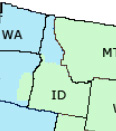 North of Riggins, right across the Salmon River Bridge we are back in the Pacific time zone! What the hey! So begins the strange time……zone!
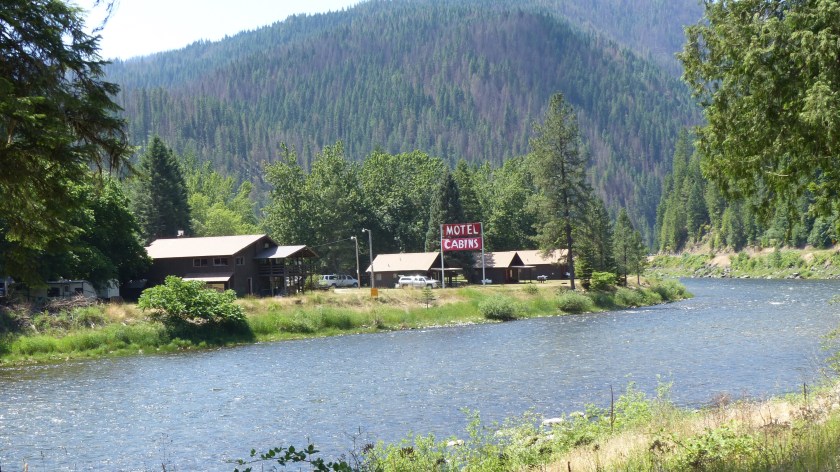
 Riggins is nestled deep in a canyon at the confluence of the Salmon and Little Salmon Rivers at 1800′ in elevation. As Riggins is the northwestern most town in the Mountain time zone, US-95 is the only highway for the state that connects the panhandle to the south. The town claims to be Idaho’s Whitewater Capital and well it could be. Rafting, kayaking are very popular as are fishing and hunting. The Seven Devil’s Mountains and Hell’s Canyon National Recreation area close by.
 Before climbing out of the canyon we pass White Bird. The town of 91 folks is named after the Nez Perce chief that lead his people to the first fight and a significant defeat of the U.S. Army in 1877.
  The entire area is like traveling through an American history museum. Signage is mostly dedicated to the Nez Perce people, how they lived and how the U.S. tried to remove them from their homeland so that the west could be settled by emigrants, miners and others. It’s interesting to note that before the army, the settlers and the miners made their presence the Native Americans and fur trappers and traders got along well together.
 US-95 climbs the 2100 vertical feet out of Salmon Canyon onto the Camas Prairie. Native Americans coveted the camas plant root as food.

 The Nez Perce depended on the root for sustenance. The women would dig up the camas bulbs using elkhorn tied to wood digging sticks. After being cleaned the bulbs were piled on a bed of grass on hot stones and place over a fire pit and steamed. Once cooked they were dried. The extensive cooking broke down a good portion of the starch content to sugar, producing a sweet potato- like flavor. The story goes when the Corp of Discovery, i.e., Lewis and Clark Expedition arrived gaunt and starving, the Nez Perce offered them camas root to eat. The root didn’t agree with the guts of most of the men and caused them a lot of grief for an extended period of time.














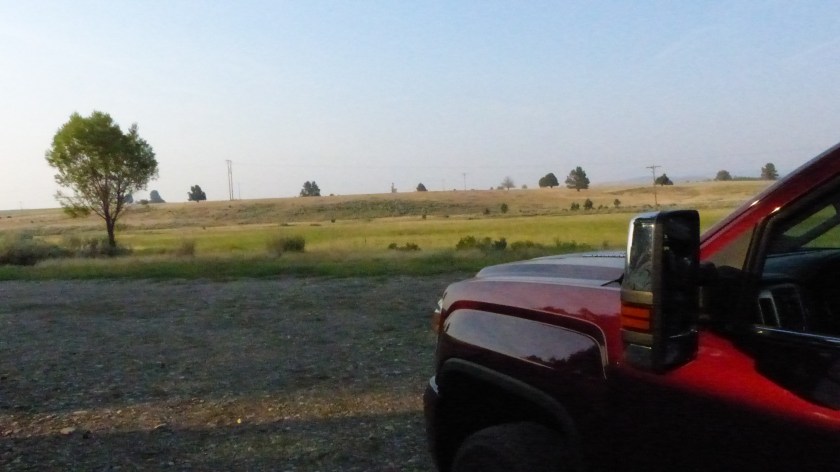 Morning at the ranch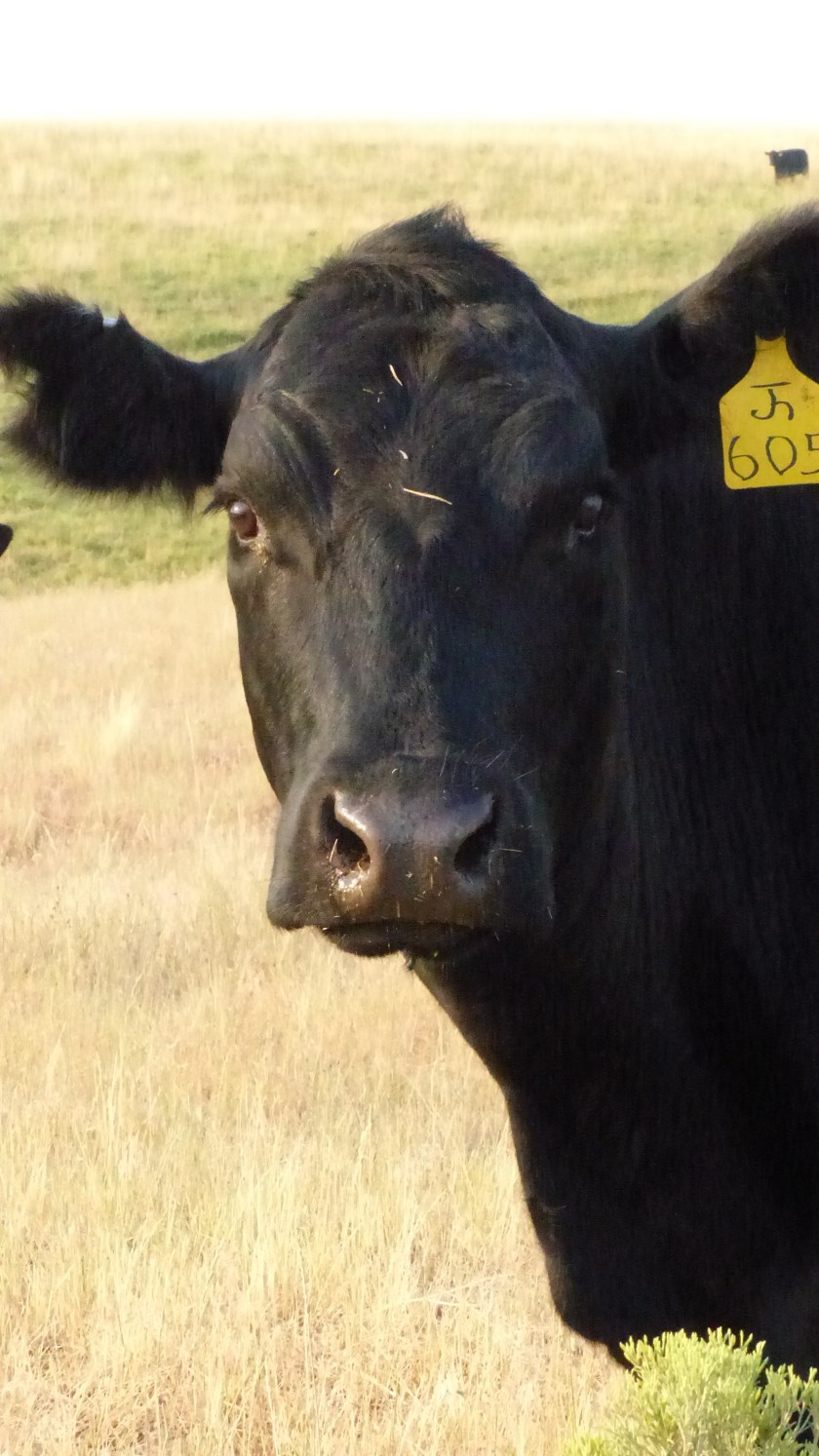


 Travel With Jil and Mike